

What Gives Stevia Its Sweetness? Scientists Uncover the Genetic Secret
New study reveals how genes and their cell-specific activity in stevia leaves shape the flavor of this widely used natural sweetener
Stevia is a widely used sweetener, but why do some stevia varieties taste cleaner and more sugar-like than others? Recent research conducted at the University of Toyama shows that stevia’s sweetness is genetically linked to variations in specific glycosyltransferase genes and their cell-specific activity in leaves. By combining genetic analysis with cell-level imaging, the team uncovered how stevia produces its high-value sweet compounds, opening the door to better-tasting natural sweeteners for foods and beverages.
Natural sweeteners are widely used across the world as a substitute for sugar. One of the most popularly used sweeteners is stevia, which is sourced from the leaves of Stevia rebaudiana. This plant produces steviol glycosides (natural sweet compounds) that can be up to 300 times sweeter than regular sugar. However, each variety of stevia has its own distinct taste. Some varieties have a clean, sugar-like flavor, while others leave a bitter aftertaste.
For a long time, scientists have known that compounds like Rebaudioside D and M (premium sweet molecules derived from stevia) are more desirable, but what controls their production remains unclear. Uncovering this, a new study led by Professor Tsubasa Shoji from the Institute of Natural Medicine, University of Toyama, suggests that the sweetness of stevia is not a matter of chance, but it is determined by specific genes and where those genes are active within the leaf. Details of the study were published in the journal New Phytologist on May 14, 2026.
To investigate this, the researchers first constructed a high-quality reference genome, providing a complete map of stevia’s DNA. This enabled them to identify genes involved in the production of sweet compounds. They then used advanced techniques, including single-nucleus RNA sequencing to analyze gene activity in individual cells and imaging mass spectrometry to map the distribution of chemical compounds within leaf tissues.
“We identified a group of UGT76G glycosyltransferase genes that play a key role in enhancing the sweetness. These enzymes attach glucose molecules to steviol glycosides in the leaf, influencing the balance of compounds associated with sweeter and cleaner taste profiles,” explains Prof. Shoji.
Additionally, the researchers found that UGT91D4 was active only in a specific group of cells within the leaf, particularly in the mesophyll (inner photosynthetic tissue) and the epidermal cells (outer protective cells). This restricted expression pattern suggests that cell-type-specific gene activity may be one reason why desirable compounds such as Rebaudioside D and M accumulate only at limited levels. The study also suggested that small genetic differences, known as haplotypes, may help explain why sweetness-related genes work differently among stevia varieties.
“Thus, the flavor profile of stevia is determined not just by its genes, but by precisely where those genes are activated,” concludes Prof. Shoji.
The study finds major implications for the food and beverage industry. By identifying the genes responsible for better taste, researchers and breeders may be able to develop next-generation stevia varieties that provide cleaner sweetness and reduced bitter aftertaste. These advances could also support the development of healthier, low-sugar products with improved taste for consumers, reinforcing global efforts to reduce sugar intake and the health risks associated with excessive consumption.
Looking ahead, these findings could accelerate the production of natural sweeteners that are not only more appealing to consumers but also more efficient for industrial-scale use.
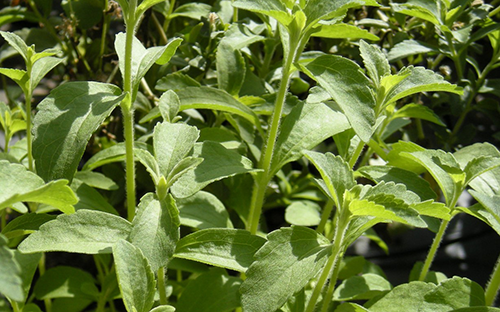
The sweetness of stevia is shaped not only by its genes but also by where key genes are switched on in the leaf.
Research Details
What Gives Stevia Its Sweetness? Scientists Uncover the Genetic Secret[PDF, 489KB]
Original article information
Title
Multi-Omics Dissection of Steviol Glycoside Synthesis Reveals Haplotype-Linked Specialization of UGT76G Genes in Stevia rebaudiana
Published in
New Phytologist
DOI
https://doi.org/10.1111/nph.71191
Media contact
Yumiko Kato
E-mail: 